
VIP member
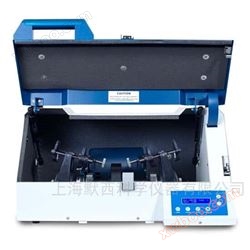
Coleparmer high-energy ball mill BM-400
Coleparmer high-energy ball mill BM-400 typical grinding samples: soil, plant materials, cement, cement slag, concrete, slag, coke, coal, glass, elect
Product details
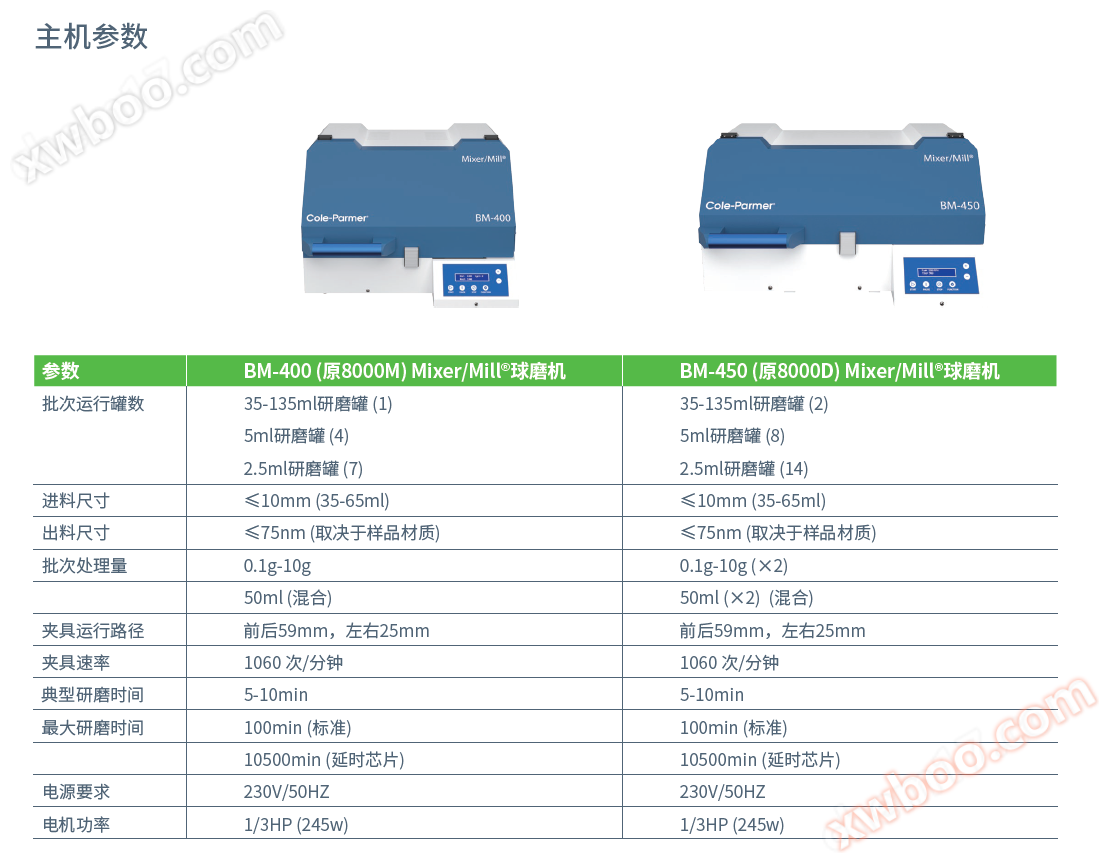
Coleparmer high-energy ball mill BM-400Original (8000M) BM450Original (8000D)

Cole Parmer Sample Preparation (formerly SPEX) established the American ball mill industry standard and is a renowned inventor of three-dimensional motion ball mills, combining high-energy grinding, mechanical alloying, and nanogrinding technologies. Maintaining the convincing ability of high-energy ball mills, winning by performance rather than appearance, with actual performance far exceeding European counterparts. This design has been proven to be a more effective three-dimensional motion method, far superior to left-right and planetary ball milling methods. Research has shown that its grinding energy input is 6-8 times higher than traditional planetary two-dimensional motion, and its heat generation ratio is low, reducing thermal effects. Greatly improving the speed and efficiency of grinding, it can quickly grind hard and brittle samples into powder. The grinding ability and mechanical durability limit reach 10500 minutes, ensuring the effectiveness of mechanical alloying. By achieving mechanical alloying (mechanical activation) of the sample, high-energy grinding such as nanocrystalline or amorphous materials can be formed, resulting in extremely thorough and uniform grinding of the sample powder with outstanding effects. It enjoys a strong brand reputation in the international material grinding field.
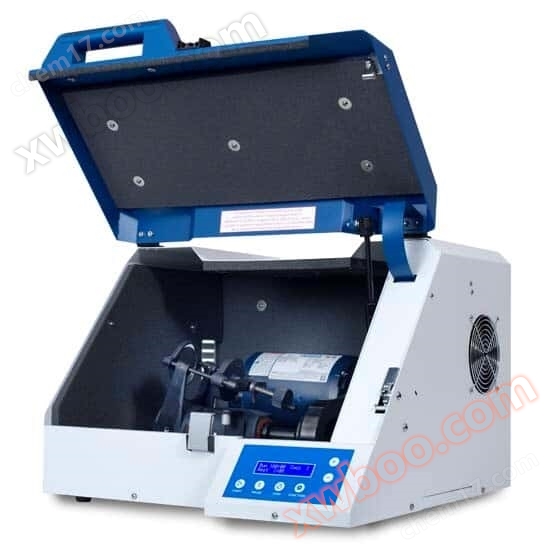
Cole Parmer Sample Preparation (formerly SPEX) has become the standard setter in the ball mill industry in the United States due to its nearly 70 years of experience in ball mill research and production, as well as outstanding contributions in the field of ball mill innovation; The BM-400/BM-450 (SPEX 8000M/8000D) series high-energy ball mill, with ∞ three-dimensional motion mode, delivers the highest mechanical energy to the sample in the shortest possible time, making it the ball mill model with the highest energy and fastest speed among all ball mills in the world; At present, there are thousands of literature worldwide on the use of BM-400/BM-450 (SPEX 8000M/8000D) series high-energy ball mills for mechanical alloying and nanocrystalline research, such as the effects of mechanical alloying on the microstructure and electrical properties of Mg63Ni30Y7 (note the subscript here when typesetting); The effect of heating rate on the crystallization behavior of Mg50Ni50 amorphous alloy (note no corner markings here when typesetting).
Coleparmer high-energy ball mill BM-400Original (8000M) BM450Original (8000D)
Grinding and mixing
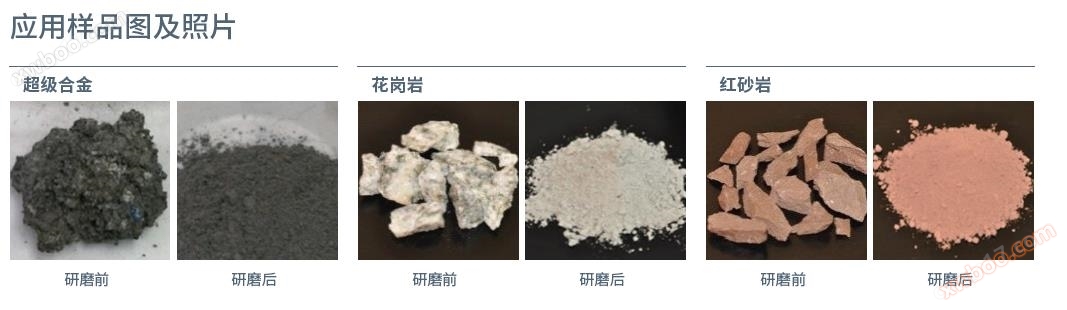
Grinding capacity: 0.2-10 g/time, mixed sample 60ml/time, grinding fineness can reach nanometer level. Strong service life, able to quickly reduce the analytical fineness of solids or mix various powders. Effectively mix lotion, pharmaceutical product powder, paint and ink powder. Quickly, effectively, and non destructively grind medium hard, hard, brittle, and fibrous substances to the required fineness for analysis, and apply them to sample preparation for spectral analysis. Typical grinding samples: soil, plant materials, cement, cement slag, concrete, slag, coke, coal, glass, electronic components, minerals, ores, silicates, diamonds, metal oxides, ceramics; High strength steel material shell ensures absolute safety of fixture operation, forced air cooling fan ensures long-term grinding without worrying about sample overheating, safety interlock system protects operators from absolute safety, anti vibration motor ensures smooth operation, dual safety anti slip fixture, 3D ∞ motion mode, simple and easy to understand operation panel, humanized angle design; The timer is set to 100 minutes at the factory and can be extended to 10500 minutes.

accessory system
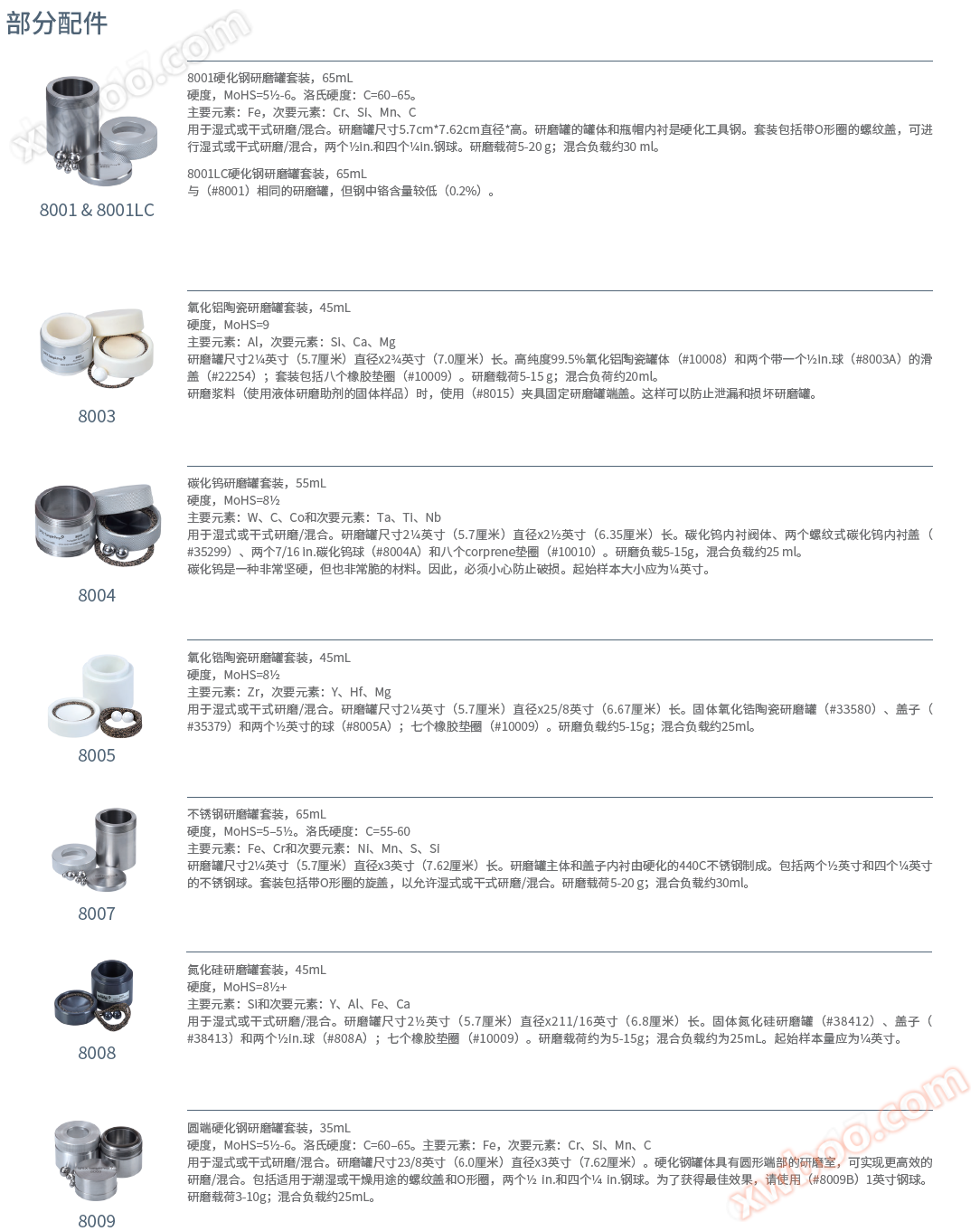
Mixing is usually carried out in a grinding tank containing grinding balls. Depending on the properties and quantity of the materials to be mixed, one or more balls can be used. For samples that clump during the mixing process, adding a slurry of water or alcohol may be helpful. Subsequently, the sample can be dried by heating the plastic bottle in a very low temperature oven. If the clumping is caused by static electricity, a small amount of cellulose (10%) can be added to the grinding tank. Grinding is usually carried out in metal or ceramic containers: steel, tungsten carbide, alumina, zirconia, silicon nitride, and agate. Dry grinding is a relatively simple and commonly used method. The criteria for container selection are usually based on grinding efficiency and trace contamination standards; Steel and tungsten carbide can be ground faster than ceramics or agate, but if the analyzed sample contains metal from the grinding tank, the use of this type of grinding tank should be avoided. Tungsten carbide, alumina ceramics, zirconia ceramics, silicon nitride, and agate grinding jars have high hardness but strong brittleness.
Online inquiry
-
Contacts
-
Company
-
Telephone
-
Email
-
WeChat
-
Verification Code
-
Message Content
-